
Why is a boudoir photoshoot so empowering?
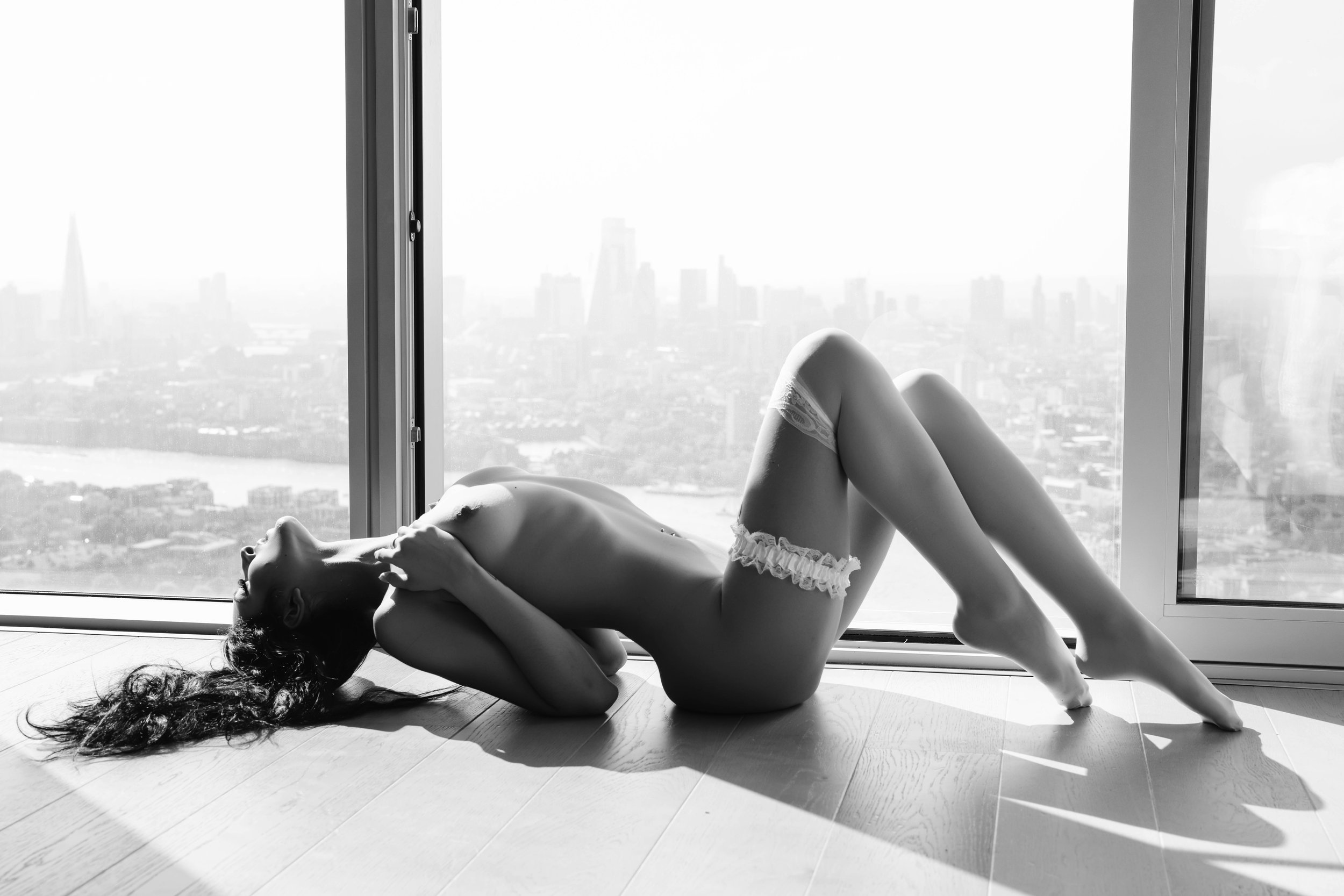
A boudoir photoshoot is empowering because it replaces the version of yourself you carry in your head with photographic evidence of the woman who actually exists. Most women hold an outdated or unkind image of themselves. A session gives you an accurate one, made deliberately, in your presence, with your consent over every frame. That is the whole mechanism. Everything else is craft.
I am a fine art portrait photographer working from a private studio in London. I photograph women — often at the point where something in their life has shifted and the old picture no longer fits.
Empowerment is a word most people use badly
It has been used to sell everything, so it has stopped meaning much.
In the studio it means something narrow and specific: you arrive uncertain about how you look, and you leave certain about how you look. Not flattered. Not transformed. Certain.
That certainty is quiet. Women don't usually leave euphoric. They leave settled — which lasts considerably longer.
Why women come after something has happened
Very few women book a boudoir session on an ordinary Tuesday for no reason. There is almost always a before and an after.
After loss
Grief takes your attention off yourself entirely. Months pass. Sometimes years. You look up and realise you have not been photographed, considered, or looked at properly in a very long time — and that the last images of you belong to a version of your life that no longer exists.
Being photographed after loss is not moving on. It is placing a marker: I am still here, and this is who I am now. Several women have told me it was the first thing they did purely for themselves since the person they loved died.
After a breakup or divorce
A long relationship leaves you with a version of yourself that was assembled with someone else in the room. Their preferences, their opinion of your body, their sense of what suited you. When it ends, that picture goes with them — and a lot of women realise they are not entirely sure what they think about themselves independently of it.
I should say what this is not. It is not revenge, and the women who book with that in mind are usually still photographing themselves for him. The sessions that work are the ones where he is genuinely not in the room. No audience, no proving, no images made to be seen by a particular person.
What it is instead is a first decision made alone. You choose what you wear, how you are photographed, and what the images are for — with no one to consult and no one to accommodate. For a woman who has spent years deferring on small things, making a series of purely personal choices in one afternoon has an effect out of proportion to its size.
Divorce clients often arrive further along than they think. The session tends to confirm something they had already worked out privately.
After trauma or illness
When your body has been the site of something difficult — an illness, a treatment, a relationship, an experience you did not choose — it can start to feel like an object that things happened to rather than a self you live inside.
A session run properly returns authorship. You choose what is worn and what is not. You choose what is photographed and what is never photographed. You see the images before anyone else does, and nothing leaves the studio without your word. For a woman who has had control taken from her, the experience of being in full command of her own image is not a small thing.
I want to be plain about this: a photoshoot is not therapy and does not replace it. It is not treatment. What it can be is a good day, run entirely on your terms, in which your body is treated with care and attention by someone who is competent — and for some women that is genuinely restorative. I have simply seen it too often to pretend otherwise.
After turning 40
Forty tends to bring an honest reckoning with visibility. Women describe feeling that the culture has quietly stopped looking at them, and that they have started to agree with it.
The women I photograph in their forties, fifties and sixties are almost always the most striking work I make. There is a directness that arrives with age and it photographs beautifully. Nothing about my approach involves making a woman look younger. The aim is to photograph her accurately — and accurate is usually the thing she has never seen.
After having a baby
Motherhood makes you the one holding the camera. You are in almost no photographs, and the ones that exist are candid, unflattering and taken by someone else at the worst possible angle.
A postpartum body has done something enormous and is frequently spoken about as a problem to be corrected. Photographing it deliberately, well-lit and well-directed, tends to interrupt that conversation. Not because the images are flattering — because they are considered. It is quite difficult to keep criticising something that has been given that much attention.
What actually produces the change
Empowerment is not a feeling I generate with encouragement. It comes from four specific things.
Direction. You are not left to work out what to do with your hands. I direct every frame — posture, jaw, weight, breath. Most women have never been photographed by someone who knows how to make them look like themselves, and it is a relief to be told exactly what to do.
Privacy. The studio is private. No one is passing through. My boudoir wardrobe is silk and tulle gowns rather than lingerie, and how much you wear is your decision, made on the day and revisable at any point.
Being seen without being judged. I am an introvert. I do not perform enthusiasm at anyone. What I offer instead is undivided attention for a few hours, which is rarer and, I think, worth more.
Something physical at the end. The images do not stay on a phone. Seeing yourself printed, finished and at scale is a different order of experience from scrolling — and it is the point at which most women stop arguing with the photograph.
What this is not
It is not a makeover. I am not correcting you.
It is not for a partner. Every so often a woman books because someone else wants the images. Those sessions are the least interesting ones for both of us.
It is not a performance of confidence. You are allowed to arrive nervous. Nearly everyone does, and it does not show in the photographs.
I document who you are right now, not who you think you should be.
Frequently asked questions
-
No. Confidence is usually a result of the session rather than a requirement for it. Most women arrive nervous and settle within the first twenty minutes, once they realise they are being directed rather than assessed.
-
Many women do, and it is one of the most common reasons for booking. The sessions that work best are the ones where the images are not intended for an ex-partner or for anyone else. If the photographs are for you, the timing is right whenever you decide it is.
-
It can be, and many women book for exactly that reason. You control what is worn, what is photographed and what is kept. A photoshoot is not therapy and is not a substitute for professional support, but a session run on your terms can be a meaningful marker of a new chapter.
-
No. A significant proportion of my clients are over forty and the work I make with them is among the strongest in my portfolio.
-
Yes, at whatever point feels right to you. There is no window you have missed and no condition your body needs to meet first.
-
Only you, unless you tell me otherwise in writing. Discretion is standard, not an upgrade.
-
I work from a private studio in London, by appointment only.